
Miners used to carry canaries into the mine: if the bird went quiet, it was time to leave. Canary tokens are the digital version. Plant one where nobody should look, and the moment someone does, you know.
Thinkst offers canary tokens for free on canarytokens.org. Out of the box they send an email. If you point them at ShadowTrackr instead, every trigger lands on your timeline, you can alert on it like any other event, and all your canaries are managed in one place. Read the introduction on the Thinkst blog if you want the background.
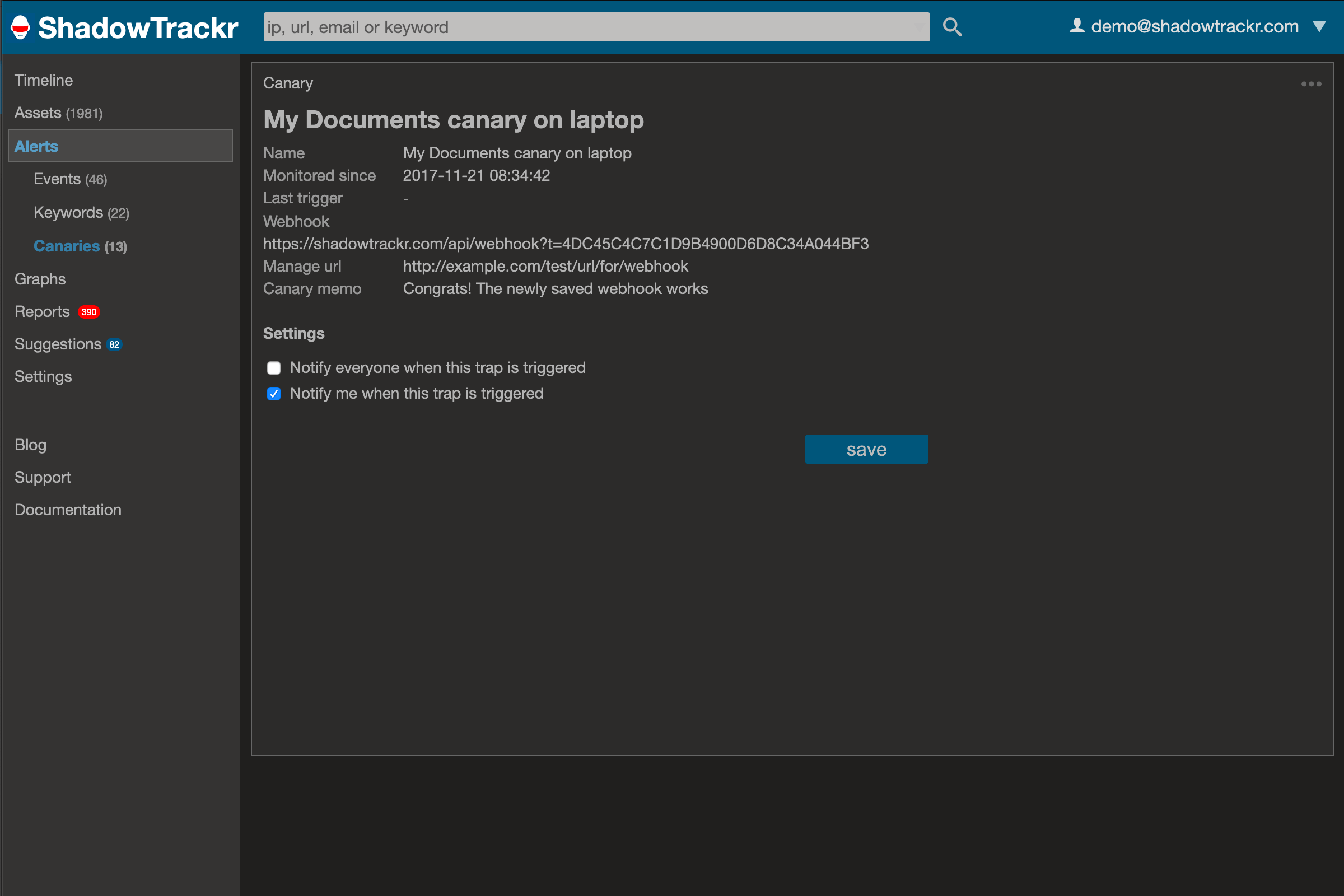
Name it "Passwords.docx" or "Annual bonus plan.docx" and fill it with fake data. It fires when opened, with the IP address and browser of whoever did. Word works in more places than PDF.
Add it as a user in a web shop, portal or remote-work system, or in a sensitive mailing list. If the user table is stolen and abused, you hear about it. Remove it before a real mailing goes out.
Hide a link or image in an internal wiki, an admin page copy or a cloned site. Anyone loading it, including a scraper, sets it off.
A hostname in a config file or credentials in a repo fire when an attacker tries to use them.
Tell the people who monitor ShadowTrackr which canaries exist, so a colleague who stumbles on one is not mistaken for an attacker.